
Offshore vs. Onshore Piping: Different Demands, Different Materials-
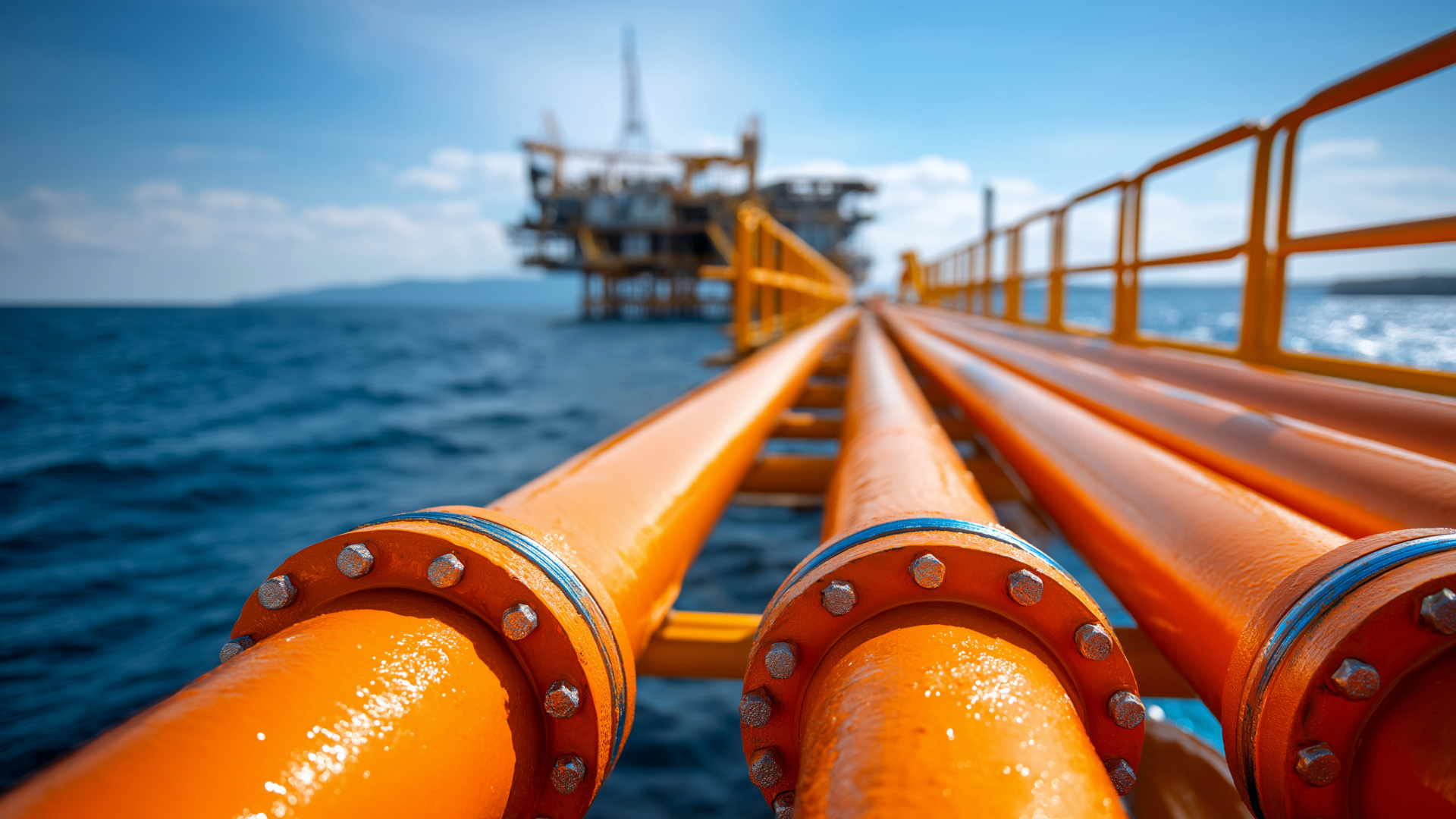
Offshore piping operates in one of the most demanding industrial environments. Exposure to seawater and salt-laden air creates a high risk of external corrosion.
Key offshore challenges include:
- Continuous exposure to humidity
- Saltwater and chloride contamination
- Marine atmospheric corrosion
- Wave and weather exposure
- Limited maintenance access
- Space and weight restrictions
- Vibration and movement
- Corrosive process fluids
- High-pressure and high-temperature services
Because maintenance and replacement can be more complex and expensive offshore, material reliability and long-term corrosion resistance are major priorities.
A piping material that may perform adequately in a protected onshore environment may require additional protection or an alternative material for offshore serviceWhat Is a Welded Carbon Steel Pipe?
Offshore piping operates in one of the most demanding industrial environments. Exposure to seawater and salt-laden air creates a high risk of external corrosion.
Key offshore challenges include:
- Continuous exposure to humidity
- Saltwater and chloride contamination
- Marine atmospheric corrosion
- Wave and weather exposure
- Limited maintenance access
- Space and weight restrictions
- Vibration and movement
- Corrosive process fluids
- High-pressure and high-temperature services
Because maintenance and replacement can be more complex and expensive offshore, material reliability and long-term corrosion resistance are major priorities.
A piping material that may perform adequately in a protected onshore environment may require additional protection or an alternative material for offshore service
Carbon steel remains widely used in offshore applications because of its strength, availability, and cost efficiency. However, it usually requires an effective corrosion-management strategy when exposed to marine environments.
Protective measures may include:
- External protective coatings
- Internal coatings or linings
- Corrosion allowance
- Cathodic protection where applicable
- Chemical treatment and corrosion inhibitors
- Regular inspection and maintenance
For more corrosive environments, stainless steel, duplex stainless steel, super duplex, or other corrosion-resistant alloys may be selected.
Duplex stainless steel is particularly valued in demanding applications because it can provide a combination of high strength and improved resistance to certain forms of corrosion. Material selection should always be based on the specific fluid, chloride exposure, temperature, pressure, and project requirements
- Corrosion management is important in every piping system, but offshore environments create additional risks.
- Saltwater contains chlorides that can contribute to localized corrosion and stress corrosion cracking in susceptible materials. Marine atmospheres can also accelerate the deterioration of unprotected carbon steel.
- Offshore piping systems may therefore require more extensive corrosion protection than comparable onshore systems.
- Onshore facilities can also experience serious corrosion, particularly when handling produced water, corrosive chemicals, hydrogen sulfide, carbon dioxide, or other aggressive fluids. However, the external environment may be easier to control compared with an offshore platform.
- The material selection process must therefore consider both internal corrosion from the process fluid and external corrosion from the operating environment
Both offshore and onshore facilities can operate under demanding pressure and temperature conditions.
Offshore production systems may transport high-pressure oil and gas from wells to processing equipment. Piping materials must be capable of withstanding internal pressure, temperature fluctuations, vibration, and mechanical loads.
Onshore facilities may include refineries, gas-processing plants, storage terminals, power stations, and pipeline networks. These systems can involve everything from low-pressure utility lines to high-pressure, high-temperature process piping.
The correct pipe material and wall thickness should be selected using the applicable design code and engineering calculations.
Factors may include:
- Design pressure
- Design temperature
- Material allowable stress
- Pipe diameter
- Corrosion allowance
- Manufacturing tolerances
- External loads
- Thermal expansion
- Cyclic service conditions
Weight is a particularly important consideration for offshore platforms and floating facilities. Every component added to an offshore structure contributes to the overall topside weight. Heavy piping systems can increase structural requirements and installation complexity. Engineers may therefore evaluate materials and pipe dimensions not only for strength and corrosion resistance but also for weight efficiency. At the same time, offshore piping layouts are often compact. Limited space can make installation, welding, inspection, and maintenance more challenging.Material choices that reduce future maintenance requirements can therefore provide significant long-term benefits, even when the initial material cost is higher
Onshore facilities generally have fewer restrictions related to structural weight and space. This allows greater flexibility in pipe routing, support design, equipment access, and maintenance.
Large onshore facilities may include extensive networks of:
- Process piping
- Utility piping
- Firewater systems
- Steam lines
- Cooling water systems
- Oil and gas pipelines
- Chemical transfer lines
- Storage and terminal piping
Carbon steel is widely used because it provides a cost-effective solution for many of these applications. Where corrosion, temperature, or process conditions require additional protection, stainless steel, alloy steel, lined pipe, or other specialized materials may be selected
Fabrication requirements can also differ significantly between offshore and onshore projects.
Offshore construction often requires extensive planning because installation and repair work may be affected by weather, access restrictions, safety requirements, and available equipment. Prefabrication and modular construction can help reduce offshore installation time.
High-quality welding procedures, qualified welders, inspection, and non-destructive testing are particularly important for critical piping systems.
Onshore facilities generally provide greater access for fabrication and maintenance. However, large-scale projects may involve extensive field welding and thousands of piping connections, requiring careful quality control and coordination.
For both environments, welding procedures and inspection requirements should comply with applicable project specifications and industry standards
Maintenance access is one of the most significant differences between offshore and onshore piping.
Offshore repairs can require specialist personnel, marine logistics, shutdown planning, and strict safety controls. A small piping failure can therefore result in significant operational and maintenance costs.
For this reason, offshore material selection often places greater emphasis on long-term reliability and corrosion resistance.
Onshore systems are generally more accessible for inspection, repair, replacement, and modification. This can make carbon steel and conventional corrosion-protection methods economically attractive for many applications.
However, easier maintenance access does not eliminate the need for proper material selection. Failures in high-pressure or hazardous service can still create serious safety, environmental, and operational consequences.| Factor | Offshore Piping | Onshore Piping |
|---|---|---|
| Operating Environment | Marine and highly corrosive | Industrial, desert, urban, or protected environments |
| External Corrosion | Often a major concern | Depends on climate and exposure |
| Space Availability | Limited | Generally greater |
| Weight Restrictions | Highly important | Usually less restrictive |
| Maintenance Access | Difficult and expensive | Generally easier |
| Material Selection | Often prioritizes corrosion resistance and lifecycle reliability | Often balances cost, availability, and operating conditions |
| Fabrication | Greater focus on prefabrication and installation planning | Greater flexibility for field fabrication |
| Typical Materials | Carbon steel with protection, stainless steel, duplex, and corrosion-resistant alloys | Carbon steel, stainless steel, alloy steel, and specialized materials |
The right piping material should be selected based on actual service conditions rather than simply whether the installation is offshore or onshore.
Key considerations include:Offshore and onshore piping systems may perform similar functions, but the conditions in which they operate can be significantly different. Offshore systems must address marine corrosion, restricted access, space limitations, weight considerations, and difficult maintenance conditions. Onshore systems may offer greater flexibility and easier access but can still face demanding pressure, temperature, corrosion, and environmental challenges. The most effective material selection strategy considers the complete operating environment, including process fluid, pressure, temperature, corrosion risk, mechanical loads, maintenance requirements, project standards, and lifecycle cost. OIS Middle East supplies industrial piping materials and related components for offshore, onshore, oil and gas, petrochemical, marine, and energy projects. Our range includes carbon steel pipes, stainless steel pipes, alloy materials, fittings, flanges, valves, and related piping products