Piping Supply Chain in the Middle East: Challenges and Solutions
The Middle East is home to some of the world’s largest oil and gas, petrochemical, power generation, water, desalination, and infrastructure projects. These industries depend on a continuous supply of pipes, fittings, flanges, valves, gaskets, fasteners, and other critical piping components. However, supplying piping materials across the region is not always straightforward. EPC contractors and project owners often face challenges related to long manufacturing lead times, fluctuating material availability, international logistics, technical compliance, inspection requirements, and the need for complete material traceability Supply-chain resilience has become an increasingly important priority in the UAE. In 2026, ADNOC launched an Industrial Resilience Program designed to strengthen supply chains, expand local manufacturing capacity, and improve business continuity for critical industrial products. For piping suppliers, the ability to provide the right material at the right time is no longer enough. Successful supply depends on technical knowledge, inventory planning, reliable sourcing networks, documentation control, and efficient logistics
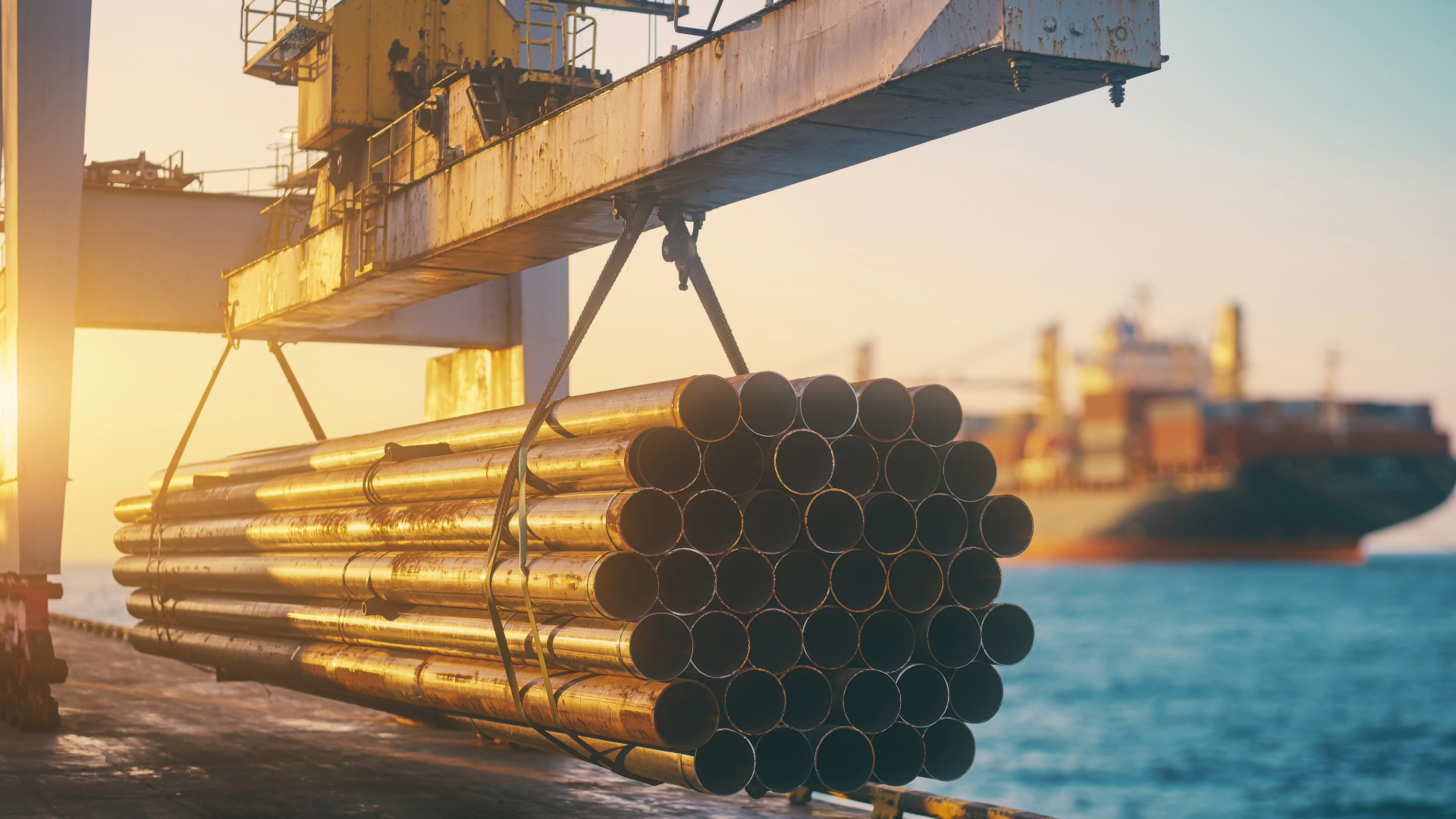
One of the most common challenges in the industrial piping supply chain is the availability of long-lead materials.
Standard carbon steel pipes, fittings, and flanges may be readily available from regional stockholders. However, procurement becomes more complex when a project requires:
- Large-diameter pipes
- Heavy-wall or special schedules
- Alloy steel materials
- Duplex or super duplex stainless steel
- Sour-service materials
- Low-temperature grades
- Special coatings or linings
- Project-specific dimensions
- Client-approved manufacturers
Long-lead items should be identified during the early stages of project planning. Procurement teams can create a critical-material register and prioritize components with the longest manufacturing or approval periods. Early engagement with approved suppliers and manufacturers can also help confirm production capacity and realistic delivery schedules. For major projects, framework agreements and long-term supplier relationships can provide greater visibility and reduce the risk of last-minute material shortages
The Middle East imports a significant volume of industrial piping materials from manufacturing centers across Asia, Europe, and other regions. International sourcing provides access to a wide range of products and material grades, but it can also introduce risks related to shipping delays, port congestion, geopolitical disruptions, changing freight costs, and customs procedures. Recent regional shipping disruptions have demonstrated how changes to major maritime routes can increase transit times and logistics costs
Relying on a single manufacturer or country of origin can create unnecessary supply risk. Piping suppliers and EPC contractors can improve resilience by developing approved alternative sources for critical materials. This may include manufacturers in different regions as well as local and regional stockholders. A diversified sourcing strategy should not compromise technical quality. Every alternative source must still meet the required standards, specifications, inspection requirements, and documentation requirements
Both offshore and onshore facilities can operate under demanding pressure and temperature conditions.
Offshore production systems may transport high-pressure oil and gas from wells to processing equipment. Piping materials must be capable of withstanding internal pressure, temperature fluctuations, vibration, and mechanical loads.
Onshore facilities may include refineries, gas-processing plants, storage terminals, power stations, and pipeline networks. These systems can involve everything from low-pressure utility lines to high-pressure, high-temperature process piping.
The correct pipe material and wall thickness should be selected using the applicable design code and engineering calculations.
Factors may include:
- Design pressure
- Design temperature
- Material allowable stress
- Pipe diameter
- Corrosion allowance
- Manufacturing tolerances
- External loads
- Thermal expansion
- Cyclic service conditions
Suppliers should maintain an organized material-documentation system that links each product to its relevant certificates and identification records. Digital document management can improve traceability and reduce the risk of lost or mismatched certificates.Materials should also be checked before dispatch to confirm that markings, heat numbers, quantities, dimensions, and documentation correspond with the purchase order and project specification
Maintaining large inventories can improve delivery speed, but it also increases warehousing costs and ties up working capital. At the same time, keeping insufficient stock can result in emergency procurement and project delays. This is a particularly important challenge for suppliers handling a broad range of pipes, fittings, flanges, valves, gaskets, and fasteners across multiple material grades and standards
Rather than stocking every possible product, suppliers can identify high-demand and business-critical items based on historical sales, regional project activity, customer requirements, and manufacturing lead times. Critical items with long replacement lead times may justify higher inventory levels, while commonly available materials can be replenished more frequently. The UAE’s industrial strategy increasingly supports this type of resilience through local manufacturing and stronger domestic supply capabilities. ADNOC’s 2026 Industrial Resilience Program includes initiatives focused on local production, demand visibility, and business continuity for strategic industrial products
The Middle East covers a large geographic area, and industrial projects may require materials to be delivered across the UAE, Saudi Arabia, Oman, Qatar, Kuwait, Bahrain, and other markets.
Transporting piping materials involves several practical challenges, including:
- Oversized and heavy cargo
- Port and customs procedures
- Cross-border documentation
- Remote project locations
- Specialized lifting and handling
- Storage and preservation requirements
- Coordinating partial shipments
Regional warehousing can reduce delivery times by positioning critical inventory closer to major industrial markets.
The UAE’s established ports, free zones, and logistics infrastructure support its role as a regional distribution hub. Energy logistics networks also depend on integrated warehousing, material handling, terminal operations, and offshore supply capabilities.
Working with experienced freight forwarders and logistics providers can help suppliers coordinate transportation, customs clearance, cargo handling, and delivery schedulinDifferent oil and gas operators, EPC contractors, and industrial projects may have their own approved vendor lists, material specifications, inspection requirements, and quality procedures.
A pipe that meets a general ASTM or API standard may still not be suitable if it does not meet additional project-specific requirements.
This can create challenges when materials are sourced based only on basic dimensions or material gradesDigital platforms are increasingly helping industrial companies improve procurement efficiency and supply-chain visibility. Centralized systems can support inventory monitoring, supplier management, documentation control, purchase tracking, and demand forecasting. ADNOC has also used digital procurement initiatives to improve purchasing efficiency and reduce procurement timelines. For piping suppliers, better visibility into stock levels, incoming shipments, manufacturer schedules, and project demand can improve planning and reduce the risk of material shortages
The Growing Importance of Local and Regional Supply
Local manufacturing and regional stockholding are becoming increasingly important to the Middle East’s industrial supply chain. ADNOC’s localization strategy includes support for domestic manufacturing across priority industrial categories, with long-term efforts aimed at reducing import dependency and improving supply resilience. The program includes products relevant to the broader industrial supply chain, such as valves, OCTG, pipe coatings, and other critical equipment. Local supply does not eliminate the need for international sourcing, particularly for specialized alloys and products. However, a stronger regional manufacturing and warehousing network can reduce lead times and provide greater flexibility during global disruptions
A strong piping supply chain should combine technical expertise with effective procurement and logistics planning.
Key practices include:
- Identify long-lead materials early.
- Maintain relationships with multiple qualified manufacturers.
- Develop strategic inventory for critical and fast-moving items.
- Verify technical specifications before placing orders.
- Maintain complete material traceability and documentation.
- Use regional warehouses to improve delivery speed.
- Monitor logistics and shipping risks.
- Use digital systems for inventory and procurement visibility.
- Evaluate suppliers based on quality, delivery, and reliability—not price alone.
- Develop contingency plans for critical materials
The Middle East’s piping supply chain supports some of the world’s most demanding industrial projects. Long lead times, international logistics, specialized material requirements, documentation control, and project-specific specifications can all affect the timely delivery of critical piping components. The most effective solution is a resilient supply strategy built around early procurement, diversified sourcing, strategic inventory, strong technical verification, complete traceability, efficient logistics, and local or regional supply capabilities. As industrial localization and supply-chain resilience continue to receive greater attention in the UAE and across the region, suppliers with strong inventory planning, technical expertise, and reliable sourcing networks will be better positioned to support EPC contractors and industrial projects